

Click here to continue reading:
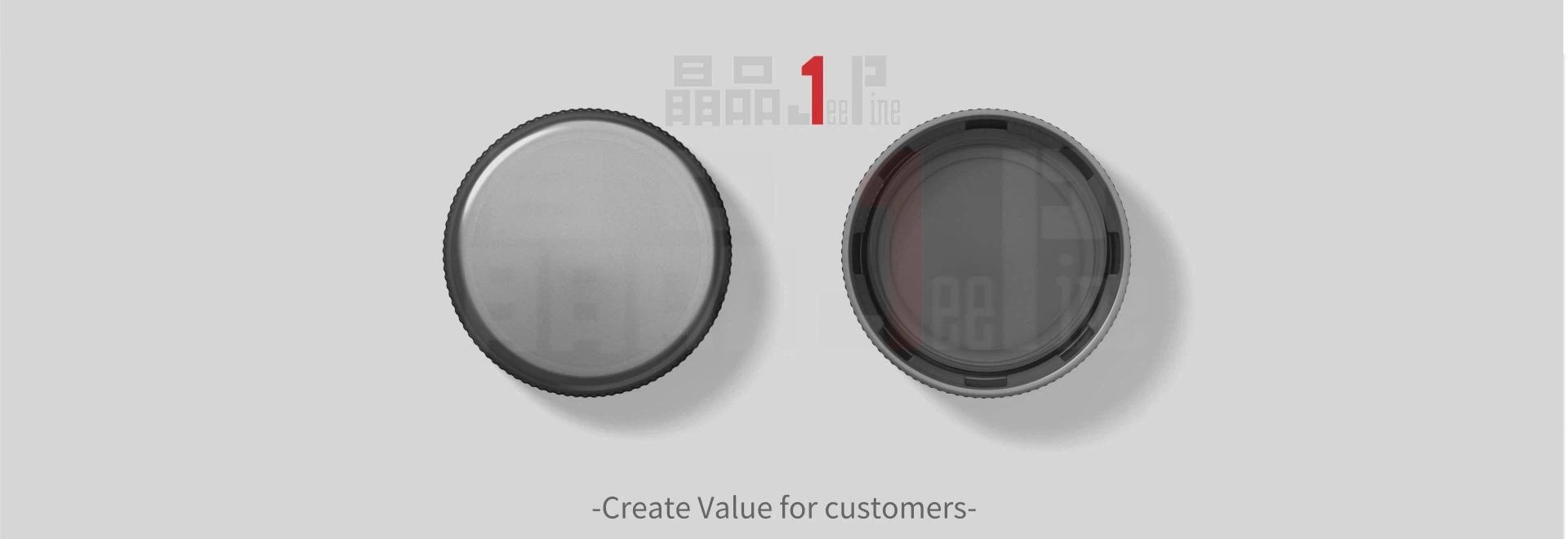
Detailed introduction about the 3025 plastic bottle cap
Testing Methods for Type 3025 Cap

1. Dimensional Measurement
Use measuring tools with an accuracy not less than 0.02 mm, or dedicated go/no-go gauges conforming to technical specifications.
2. Visual Inspection
2.1 Inspection Environment
Observation should be conducted under natural light or simulated daylight source, avoiding direct sunlight.
2.2 Printed Pattern Position Deviation Measurement
Use measuring tools with an accuracy not less than 0.02 mm to determine the positional offset of the printed pattern.
2.3 Visual Quality Standards
The cap appearance should meet the following conditions:
Surface Condition: Structurally sound, fully formed, without significant sink marks, flash, bubbles, or damage.
Color: Uniform and consistent color.
Cleanliness: Free from black spots, rust, oil stains, or other matter adhesion; no abnormal odor.
Tamper-Evident Band: The band is connected to the cap body via bridges, which should be intact and undamaged.
Printing Quality: Pattern colors are distinct and clear; the deviation of the pattern center relative to the cap's outer diameter center should not exceed 1.5 mm.
3. Printed Pattern Adhesion Test
Use adhesive tape with an adhesion force of (10±1) N/25mm. Apply it smoothly onto the printed surface of the cap, ensuring no air bubbles. Then quickly peel it off along the direction of application and check if the pattern peels off or is damaged.
4. Seal Performance Test
Cap the bottle using a capping machine at the specified rated torque, or according to the torque value provided by the supplier. Test using a seal tester: first pressurize to 200 kPa, hold underwater for 1 minute, observe for air leakage; then pressurize to 350 kPa, hold for another 1 minute, check if the cap loosens.
5. Low Temperature Test
Fill the bottle to its nominal capacity with water, seal with a Type 3025 cap, place it sideways in a low-temperature environment of 4°C ±1°C for 24 hours, then invert to check for cap cracking, deformation, or leakage.
6. Drop Test
Fill the bottle to its nominal capacity with water and seal. Test as follows:
After storage at (4±1)°C for 24 hours: If capacity is less than 1 liter, perform one free-fall vertical bottom-down drop from 1.4m height; if capacity is 1 liter or greater, perform one free-fall horizontal side-down drop from 1m height onto a concrete floor.
After storage at ambient temperature for 24 hours, repeat the corresponding drop test described above. Check if the cap detaches or leaks.
7. Torque Test
After capping at the rated torque, let it stand at ambient temperature for 24 hours. Measure the opening torque and breakaway torque using a torque meter with an accuracy not less than 0.1 N·m.